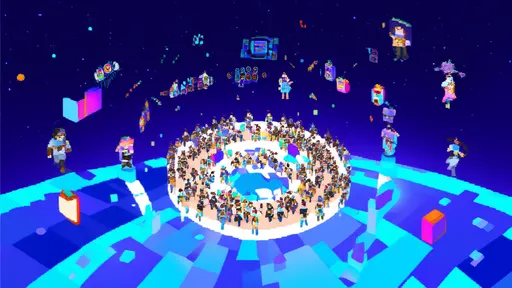
The indie game development scene has always thrived on community engagement, but recent trends suggest a fascinating shift in how these communities grow. Unlike traditional marketing funnels, indie studios are increasingly relying on organic community fission—a phenomenon where passionate players naturally segment into subgroups that then attract new audiences. This viral coefficient isn’t just about word-of-mouth; it’s a complex interplay of niche appeal, emotional investment, and decentralized content creation.
At the heart of this movement lies a paradox: the smaller and more specific a game’s identity, the greater its potential for exponential reach. Take the cult success of games like Dwarf Fortress or Undertale—their communities didn’t spread despite their quirks, but because of them. When players encounter something truly distinct, their instinct isn’t just to recommend it, but to contextualize it through memes, mods, or even academic analysis. This creates multiple entry points for new players, each tailored by different sub-communities.
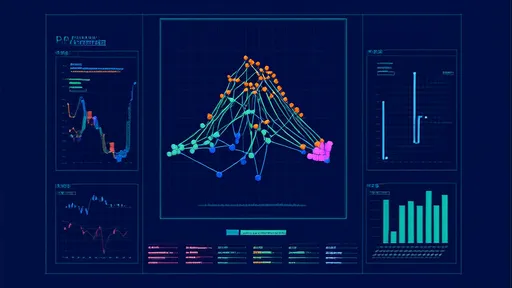
The metrics behind this fission effect reveal surprising patterns. Analytics from Discord servers and Reddit threads show that mid-sized indie titles (those with 5,000–50,000 active players) often achieve higher viral coefficients than AAA games. Why? Because their communities reach a critical mass where subgroups can form naturally—speedrunning collectives, lore theorists, fan artists—without the dilution that comes with mainstream saturation. Each subgroup becomes its own micro-influencer, attracting different demographics under the same game’s umbrella.
Platform algorithms are accidentally amplifying this effect. TikTok’s recommendation system, for instance, prioritizes niche content clusters over broad trends. A single obscure mechanic or visual glitch in an indie game can spawn hundreds of reaction videos, pulling viewers down rabbit holes they never knew existed. This organic segmentation creates what marketers call "vector growth"—where community expansion happens along multiple thematic axes simultaneously.
Developers are now designing games with fission in mind. Procedural narrative systems, like those in Wildermyth, intentionally generate bizarre moments that players feel compelled to share. The key insight? Players don’t just want to tell friends "this game is good"—they want to say "you won’t believe what happened to ME." This personal storytelling aspect transforms players from passive consumers into active community nodes.
The dark side of this phenomenon emerges when communities fracture too aggressively. Some indie titles have suffered from "over-fissioning," where subgroups develop conflicting identities—speedrunners versus immersion seekers, for example—leading to toxic infighting. The most successful studios actively cultivate cross-pollination between subgroups through events like modding jams or lore contests, maintaining cohesion without stifling organic growth.
Looking ahead, the fission coefficient may redefine how indie studios measure success. Traditional metrics like daily active users fail to capture the health of these decentralized communities. Emerging tools now track "subculture formation rates" and "meme mutation velocity"—attempts to quantify how organically a game’s community diversifies. In this new paradigm, a game’s longevity depends less on constant updates and more on providing fertile ground for player-driven ecosystems to evolve.
What began as a quirky byproduct of indie development has become its most potent growth engine. As AAA studios struggle with homogenized player bases, small teams are proving that intentional weirdness, when coupled with community autonomy, creates something far more valuable than raw player counts—a living, breathing cultural phenomenon that no marketing budget could ever manufacture.

By /Aug 15, 2025

By /Aug 15, 2025
By /Aug 15, 2025
By /Aug 15, 2025
By /Aug 15, 2025
By /Aug 15, 2025

By /Aug 15, 2025
By /Aug 15, 2025

By /Aug 15, 2025

By /Aug 15, 2025
By /Aug 15, 2025

By /Aug 15, 2025
By /Aug 15, 2025
By /Aug 15, 2025

By /Aug 15, 2025

By /Aug 15, 2025

By /Aug 15, 2025
By /Aug 15, 2025
By /Aug 15, 2025

By /Aug 15, 2025